
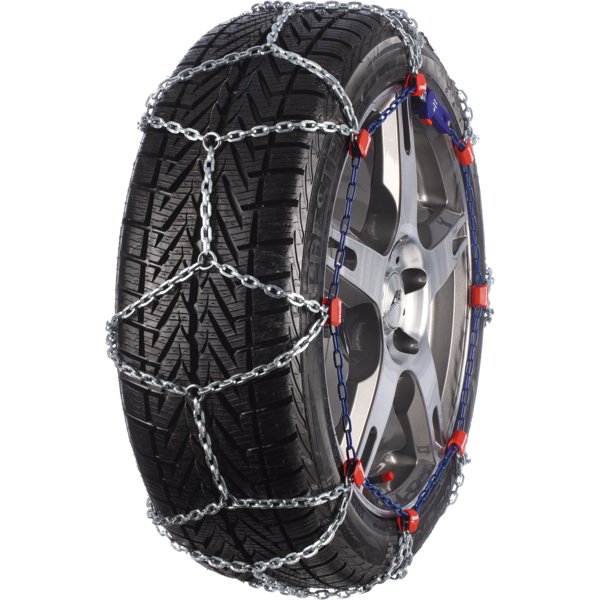
Ski season is close, and for many Swiss drivers that means weekends spent on mountain roads and Alpine passes. Good winter tyres do most of the work, but there are moments when even the best tyre runs out of grip: a closed layer of snow on a steep pass, black ice on a hairpin bend, or a sign at the roadside that makes chains compulsory. That is where snow chains come in.
In earlier articles we looked at ordering winter and summer tyres from ReifenDirekt and at the latest winter tyre tests. This time we focus on a smaller but equally important piece of winter kit: snow chains. The advice below is based on ReifenDirekt’s own snow chain guide (Schneeketten), as archived in 2026, while the product photos show chains from the Austrian maker pewag, one of the brands ReifenDirekt mentions.
Find Snow Chains at ReifenDirekt.ch
In this guide
What Snow Chains Actually Do
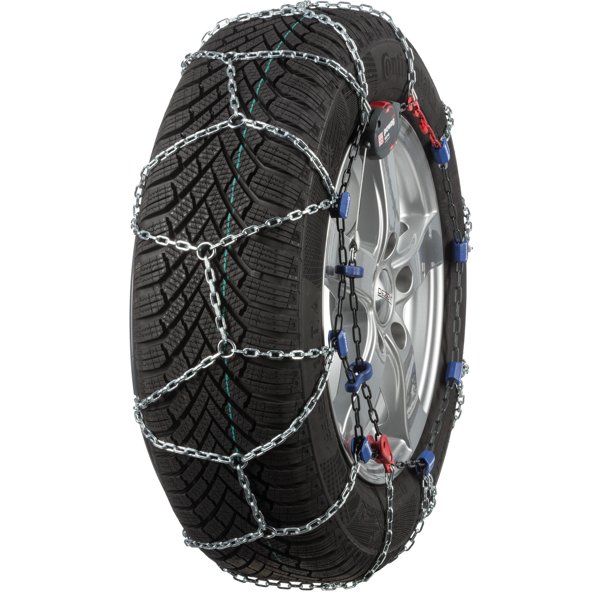
The idea is simple. Steel chains are fitted around the tyre, and the weight of the car presses the individual links into the snow or ice. According to ReifenDirekt, this stops the driven wheels from spinning when you pull away and prevents the car from sliding sideways on a slippery surface. That control matters most on steep descents and on long climbs up to a mountain resort.
ReifenDirekt also points out that this can happen even with four-wheel drive and proper winter tyres fitted. All-wheel drive helps you get moving, but it does not help you stop or steer on ice. Chains add grip where the tyre alone cannot cope.
When Are Snow Chains Required?
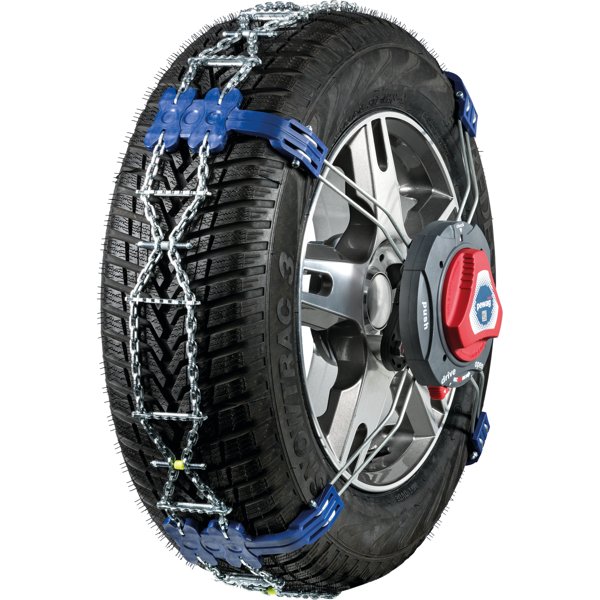
Chains are most often compulsory in ski regions, on mountain passes and on Alpine roads with a closed snow cover. ReifenDirekt explains that this is shown by a round blue sign with a snow chain symbol (referred to by the shop as traffic sign 268). Even where they are not required, the shop recommends fitting chains for your own safety when the road is covered.
If Austria is on your winter holiday list, take note: ReifenDirekt says the Austrian ONORM standard is binding for chain requirements there, and only chains marked accordingly meet the rules. Quality makers such as pewag and Michelin also have their products tested by TUV and GS, according to the shop.
Snow Chains vs Traction Aids
In the shop you will also see so-called traction aids (Anfahrhilfen). These are plastic and metal carriers with spikes that cover only a small part of the tread and are attached with straps or a click system. ReifenDirekt is clear that you should not buy them instead of snow chains, because they do not meet the requirements.
| Equipment | What it does | Good to know |
|---|---|---|
| Winter tyres (3PMSF) | Everyday grip in cold, snow and slush | The base layer of winter safety |
| Snow chains | Maximum grip on closed snow and ice | Required where sign 268 is shown; max 50 km/h |
| Traction aids | Help to pull away | Not a replacement for chains, per ReifenDirekt |
How to Find the Right Size
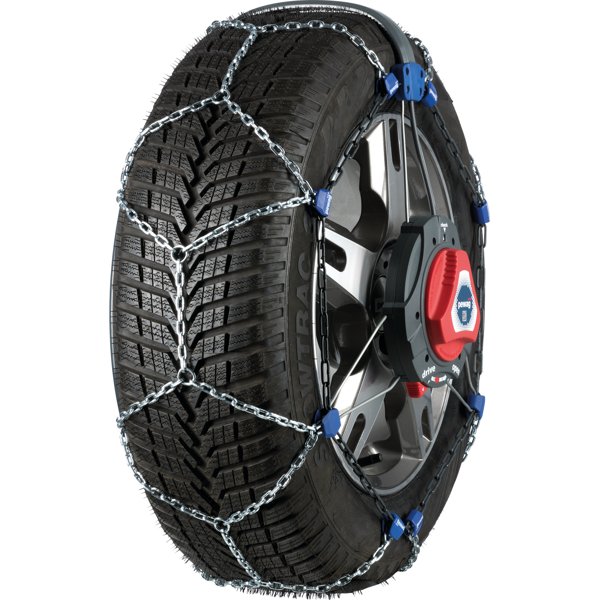
Chains must match your tyre exactly. ReifenDirekt says you can find the tyre size and diameter on the sidewall of your winter tyres and in your vehicle registration document. With that information you can use the snow chain search on the ReifenDirekt shop to filter models that fit your car.
Whether you run steel or alloy wheels, tyre size and diameter are the deciding factors. If you change wheel size between seasons, check the size again rather than relying on last year’s chains.
Fitting Chains: A Step-by-Step Routine
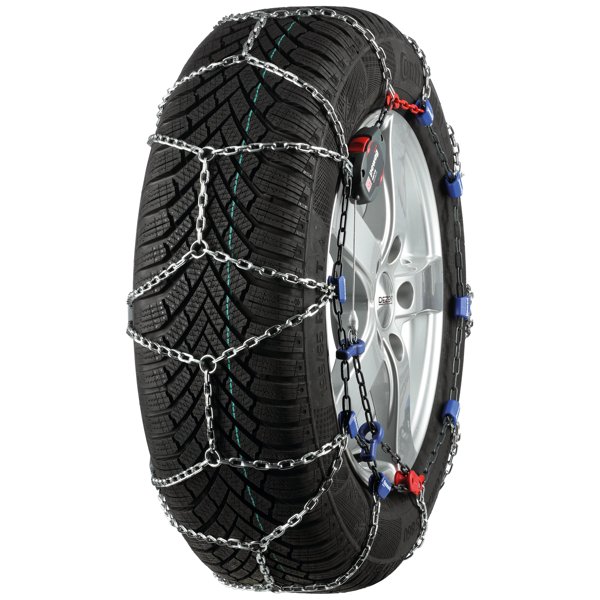
ReifenDirekt recommends a dry run at home the first time you use a new set. Fitting chains in sub-zero temperatures with cold fingers is much easier if you already know how they work. Always carry at least two chains and fit them on the driven axle so the wheels do not spin when you pull away. The shop lists these steps:
- Pick a safe place to stop, switch on the hazard lights and put on a high-visibility vest.
- Follow the fitting instructions supplied with the chains.
- Drive about 100 metres, then stop and check that the chains sit correctly.
- Re-tension the chains if needed.
For all-wheel-drive cars, ReifenDirekt notes that two chains on one driven axle are in theory enough, but citing the German motoring club ADAC, it says fitting all four wheels is recommended in especially difficult conditions and improves overall handling.
Speed Limit and Driving Style
With snow chains fitted, the maximum speed is 50 km/h, according to ReifenDirekt. The shop advises driving even slower where possible to reduce centrifugal forces and keep the car, motorhome or van under control. A gentler pace also helps prevent the chain links from damaging the wheel arches or alloy rims. Take chains off as soon as you reach a cleared road, as driving on dry asphalt wears them quickly.
Alloy Wheels and Snow Chains
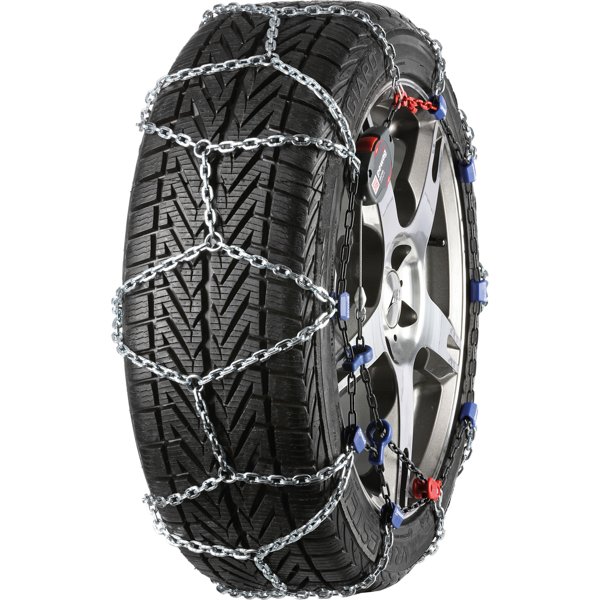
Many drivers like to keep their alloy wheels in winter. ReifenDirekt says steel rims remain the first choice in snowy Alpine regions, while alloys are less of a concern in milder areas. If you do keep alloys, careful fitting is essential to avoid scratches. The shop mentions that some models in tests, such as pewag’s Snox SUV, are self-centring after fitting according to the maker, which makes the job easier.
A Quick Pre-Trip Checklist
- Check your tyre size and match it to the chain size before you leave.
- Practise fitting the chains once at home.
- Pack gloves, a mat to kneel on, a torch and a high-visibility vest.
- Check border rules if you are driving into Austria, Italy or France.
- Make sure your winter tyres have enough tread left.
Shop Snow Chains and Winter Tyres
Final Thoughts
Snow chains are one of those items you hope never to need, but on a closed pass or an icy road to the ski station they can make the difference between a smooth trip and a long wait. Pick the right size, practise once at home and keep the 50 km/h limit in mind. You can browse chains alongside winter tyres on ReifenDirekt.ch, and check sizes using the snow chain search on the shop.
Disclaimer: This article contains affiliate links. If you buy through these links we may earn a commission at no extra cost to you. Advice is based on ReifenDirekt’s snow chain guide as archived in 2026; rules, products and prices can change, so always check the latest information before you travel. Product images: pewag.