
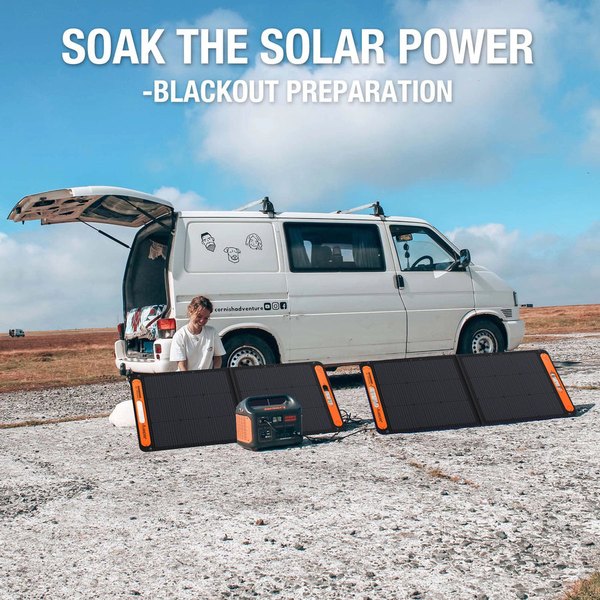
British camping has changed. A few years ago, off-grid power meant a noisy petrol generator or a leisure battery that went flat by Sunday morning. Today, more and more campers, vanlifers and festival-goers use a quiet portable power station instead.
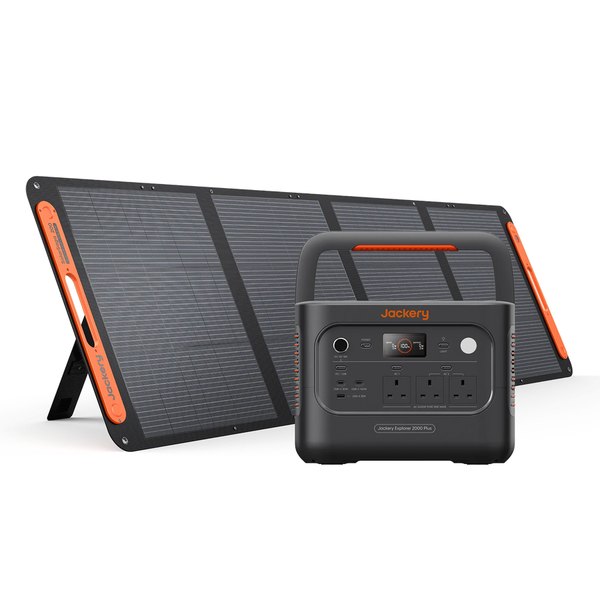
Jackery is one of the best-known names in this space. Its Explorer power stations, SolarSaga solar panels and new DC-DC alternator charger can be combined into a complete off-grid setup for a tent, a campervan or a caravan.
This guide walks through how to choose the right size, how to keep it charged on the road, and which pieces you actually need.
Why a Power Station Beats a Generator on a UK Campsite
Many UK campsites ask guests to avoid generators, or ban them outright during quiet hours. A battery power station has no fumes and is close to silent.
The Jackery Explorer 1000 v2, for example, is rated at under 22dB in operation, which Jackery describes as whisper-quiet. You can run a fan, charge phones or power a coolbox overnight without disturbing the next pitch.
Modern Jackery units also use LiFePO4 batteries, which are built for long service lives. Jackery rates the Explorer 1000 v2 for 4,000 cycles, or up to 10 years of daily use.
Step 1: Work Out How Much Power You Need
Capacity is measured in watt-hours (Wh). The simplest way to size a power station is to list what you will run and for how long.
- Phones, cameras and head torches: a few watt-hours each per day
- A laptop: roughly 50 to 100Wh per working day
- A 12V compressor coolbox: often 300 to 600Wh per day, depending on the weather
- An electric blanket or small heater: much more, so check the wattage carefully
For a weekend in a tent with phones, lights and a laptop, a compact unit is enough. For a campervan with a fridge, lights and devices running every day, you will want around 1kWh or more.
Step 2: Pick Your Explorer
For tents, festivals and day trips: Explorer 240 v2
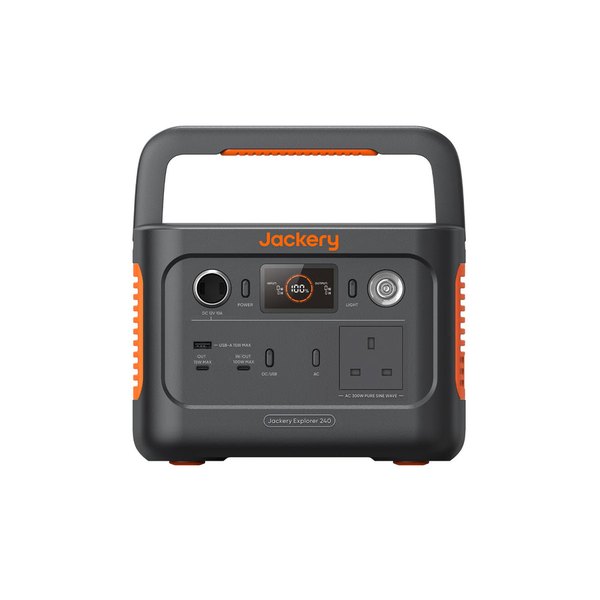
The Explorer 240 v2 is small enough to fit in a backpack. Jackery says it offers 300W output, five ports including 100W USB-C, and emergency charging in about one hour. It also uses an LFP battery rated for 3,000 cycles.
For weekend vans and longer trips: Explorer 1000 v2
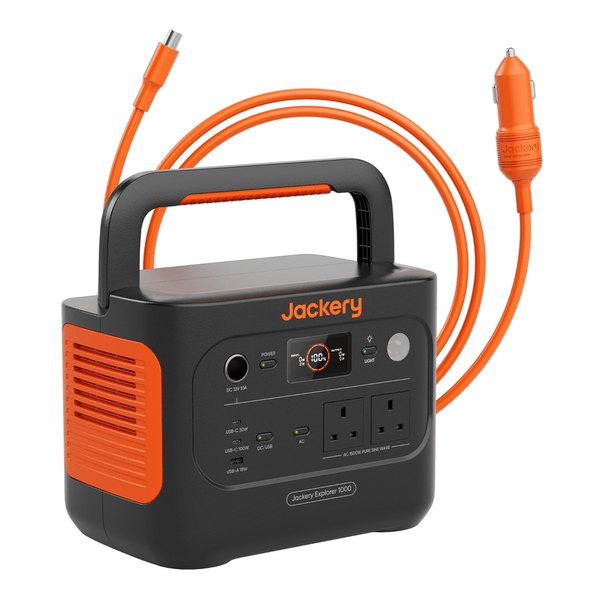
The Explorer 1000 v2 is the sweet spot for many campers. It offers 1,070Wh of capacity and 1,500W of output, enough to run a kettle-style load briefly or a fridge for a long time. Jackery calls it the smallest and lightest 1kWh LFP power station, 18% smaller than the original Explorer 1000.
It can also act as a UPS, switching over in 20 milliseconds or less, which makes it useful at home during a power cut too.
For full-time vanlife and large caravans: Explorer 2000 Plus v2
If you work from the road or run a lot of 230V kit, the larger Explorer 2000 Plus v2 is designed for heavier use and can be expanded with an extra Battery Pack 2000 Plus v2 for more capacity.
Step 3: Choose How You Will Recharge
The real trick to living off-grid is not just storing power, it is putting it back. Jackery gives you three main options.
Solar panels
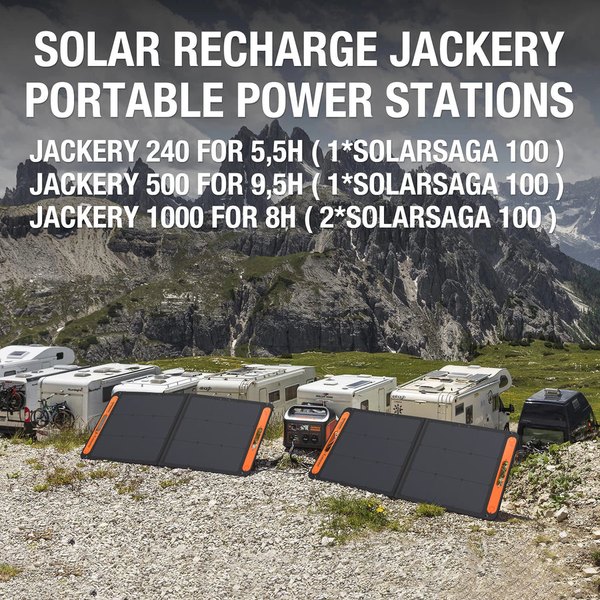
SolarSaga panels fold flat and stand on kickstands. Jackery says the SolarSaga 100W weighs about 8 lbs and reaches up to 25% conversion efficiency. On a sunny pitch, one or two panels can top up a 1kWh unit during the day.
In the UK, solar output drops sharply in winter and on overcast days, so treat it as a top-up rather than your only source between October and February.
Charging while you drive
This is where the new Jackery DC-DC Alternator Charger 600W comes in. It charges your power station from the vehicle’s alternator while you drive. Jackery says it is six times faster than a cigarette lighter port and that around two hours of driving can deliver 1kWh.
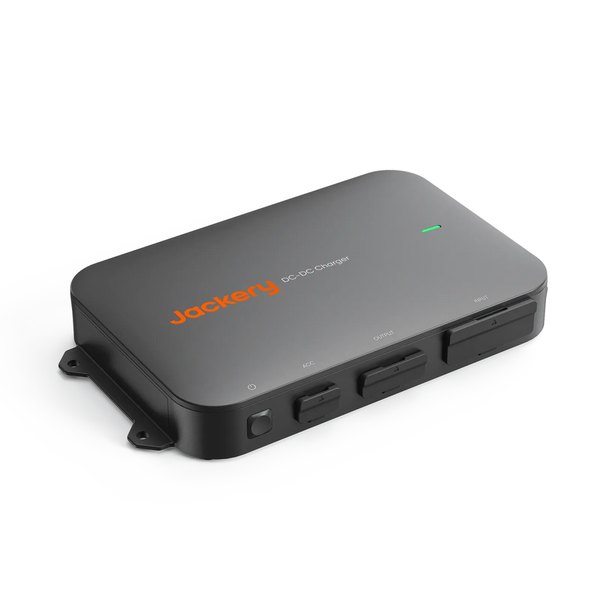
It supports 12V and 24V vehicles, works with Jackery DC8020 models, and uses ACC signal and voltage detection to start and stop automatically, protecting your starter battery. Jackery recommends professional installation.
Mains hook-up
When you are on an electric hook-up pitch, you can recharge from the mains. The Explorer 1000 v2 supports emergency super charging, with a full charge in as little as one hour.
Step 4: Put the Kit Together
Here are three example setups, all built from current Jackery UK products:
- Tent weekender: Explorer 240 v2 plus the SolarSaga 40W Mini panel
- Weekend campervan: Solar Generator 1000 v2 (Explorer 1000 v2 with a SolarSaga panel) plus the car charging cable
- Full-time van: Explorer 2000 Plus v2 with solar panels and the DC-DC Alternator Charger 600W
Bundles such as the Jackery Solar Generator 1000 v2 combine the power station and panels in one purchase, which is often simpler than buying parts separately.
Build Your Jackery Solar Generator
Practical Tips for Off-Grid Power in the UK
- Keep the power station inside the vehicle or tent, out of rain, and use panels outside
- Angle solar panels towards the sun and move them as the day goes on
- Pre-chill your coolbox on hook-up before heading off-grid
- Use the Jackery app on supported models to monitor charge and output
- Store the unit partly charged over winter and top it up every few months
Final Thoughts
A Jackery setup can replace a noisy generator, keep your fridge cold for days and let you work from a wild campsite with a full laptop battery. Size the power station to your real needs, choose a recharge method that matches how you travel, and you are set.
Browse the full range and current bundles at Jackery UK.
FAQs
Can a Jackery run a campervan fridge?
Yes. A 12V compressor fridge is one of the most common loads. A 1kWh unit such as the Explorer 1000 v2 can usually run one for a day or more, depending on the fridge and the weather.
Is it safe to use inside a van?
Power stations produce no fumes, so they can be used inside. Keep them ventilated, dry and secured while driving.
How long does solar charging take?
It depends on the panel size and the sunlight. Jackery quotes solar charging of the Explorer 240 v2 in around three hours under good conditions.
Do I need an electrician for the DC-DC charger?
Jackery recommends having the alternator charger installed by a professional modification shop.
