
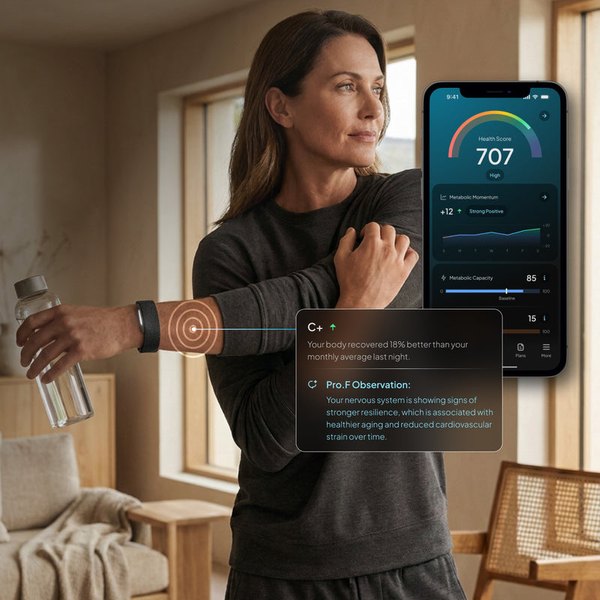
Wearable health trackers have a hidden cost. Many of the best-known names now sell their hardware as part of a membership, which means you keep paying every year, and if you stop, some of the features you rely on stop too. Over a few years, that monthly fee can add up to far more than the device itself.
Hume Health has built its Hume Band 2.0 around the opposite idea. You pay once, and Hume says your core scores and data stay free for good. Here we compare the Band 2.0 with two popular rivals, Whoop 5.0 and Oura Ring 4, on what they cost over three years, how long the battery lasts and what each one measures.
In this guide
Three Trackers Side by Side
Prices are in US dollars and come from each brand’s own website at the time of writing. Hume’s three-year figures are its own comparison, which we checked against Whoop and Oura’s published prices.
| Hume Band 2.0 | Whoop 5.0 | Oura Ring 4 | |
|---|---|---|---|
| Upfront price | $249 one-time | Included in membership | $349 to $499 |
| Ongoing fee | None required | $199 to $359 a year | $69.99 a year |
| Approximate 3-year cost | $249 | About $600 to $1,080 | About $560 to $710 |
| Battery life | Up to 14 days | About 4 to 5 days | About 4 to 8 days |
| Screen | None | None | None (ring) |
| Blood-pressure insights | Trend insights on the base device | Top Life tier only | Not a core feature |
| If you stop paying | Keeps working | Insights stop | Many features need membership |
The Subscription Problem
Whoop’s memberships run from $199 a year for its One plan to $359 a year for Life, which adds the Whoop MG device with ECG and blood-pressure insights. The hardware is included, but the membership is the product. Oura sells its Ring 4 from $349 to $499 depending on the finish, then charges $5.99 a month or $69.99 a year for a membership that unlocks its full scores and trends.
Hume’s pitch is simple: the Band 2.0 costs $249 once, then nothing every year after. There is an optional Hume Premium plan, which Hume prices at about $8.99 a month, for AI coaching and extra reports, but the company says you never need it to use the device or see your data. Over three years, that puts the Band at roughly a quarter to a half of the cost of its rivals.
What the Hume Band 2.0 Tracks
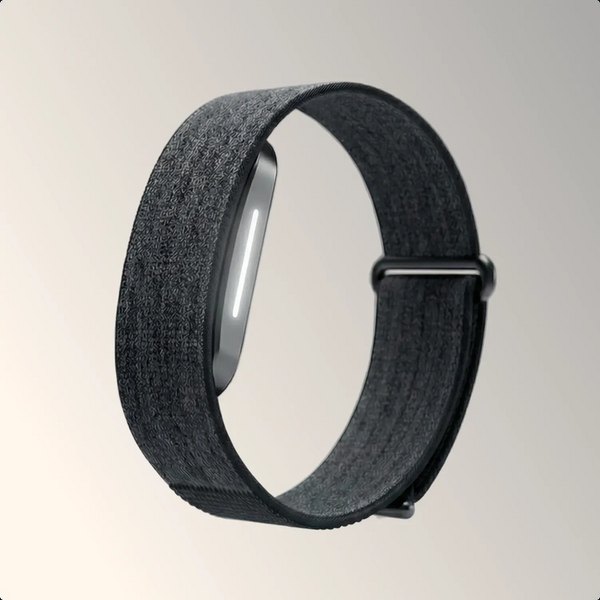
The Band is a slim, screenless sensor on a soft woven strap. It tracks heart rate around the clock, overnight heart-rate variability, resting heart rate, blood oxygen, skin temperature, sleep stages, strain, steps and calories. The Hume app turns these into a daily recovery score, a sleep score and an overall Health Score.
Hume also adds longevity-style measures that most trackers do not offer. Pace of Aging gives a directional read on whether your habits are speeding up or slowing down your biological ageing, and Metabolic Momentum shows whether your metabolic trend is building, holding or slipping week to week. Hume is clear that these are wellness trends, not medical measurements. Explore the Band 2.0 features.
Battery Life and Comfort
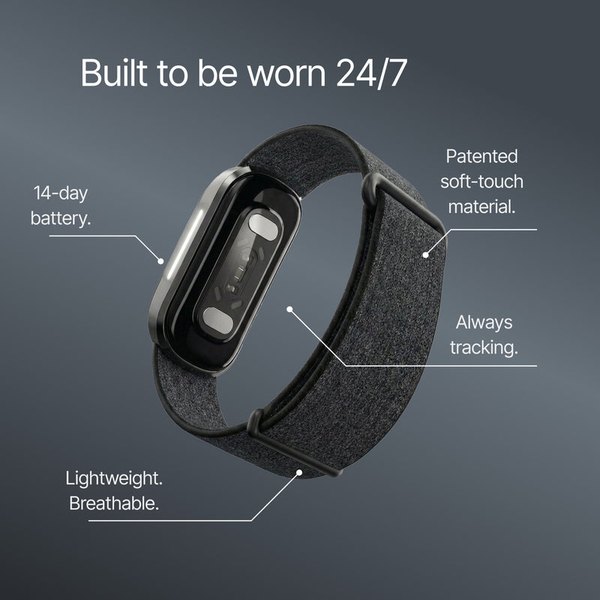
Battery life is where the Band stands out. Hume quotes up to 14 days on a charge, with charging over USB-C taking roughly 20 to 80 minutes depending on the battery level. By Hume’s figures, Whoop needs charging about every four to five days, and an Apple Watch every night. Because the Band has no screen and no notifications, it is designed to be worn day and night, including in bed and in the shower. The sensor is IP68 rated and water-resistant to 1 metre for up to 2 hours.
Blood-Pressure Trend Insights
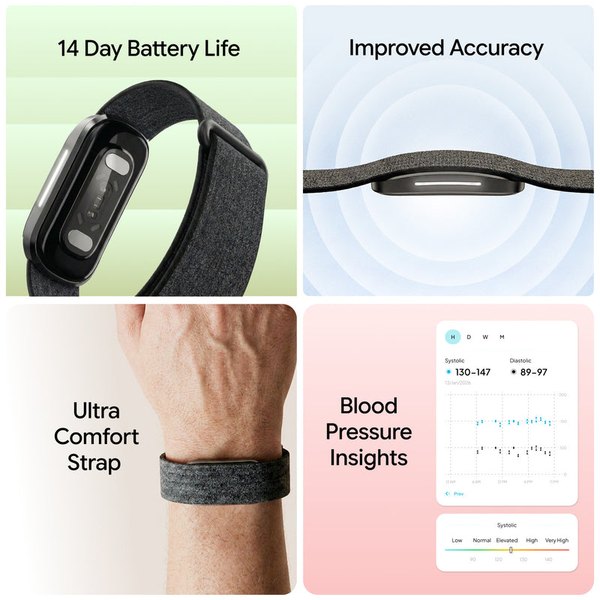
One headline feature of the 2.0 model is blood-pressure trend insights. Using optical sensors, five LEDs and four photodiodes, the Band shows how your blood-pressure pattern shifts over days with sleep, stress and habits. Hume stresses that this is a relative trend, not a cuff reading or a diagnosis. On Whoop, similar insights sit on the top Life tier. If you have concerns about your blood pressure, use a validated cuff and speak to your doctor.
Adding the Hume Pod
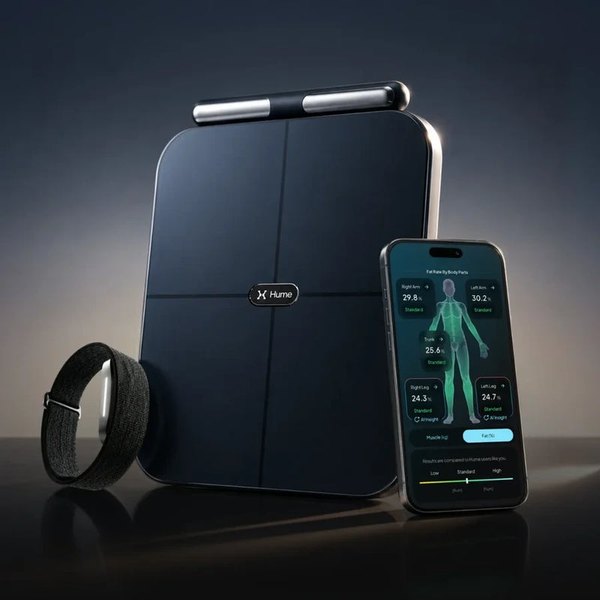
Hume is also known for the Hume Pod, a smart body composition scale that works in the same app. The Band covers sleep, recovery and daily activity, while the Pod shows what is happening to body fat and muscle underneath your weight. Hume sells the two together as a bundle, and its own comparison notes that body composition is something neither Whoop nor Oura offers in their apps.
Which Tracker Should You Choose?
- Choose the Hume Band 2.0 if you want long battery life, no screen and no ongoing fees.
- Choose Whoop if you are an athlete who wants detailed strain coaching and is happy to pay a yearly membership.
- Choose Oura if you prefer a ring to a wrist strap and do not mind the monthly fee.
- Whichever you pick, add up the membership over the years you plan to use it, not just the upfront price.
Trial, Shipping and Returns
Hume offers a 45-day at-home trial: wear the Band for 45 days and, if it is not for you, send it back for a refund, even if it has been used. Hume ships to the US, Canada, the UK, the EU and Australia, with any international shipping cost shown at checkout. Prices can vary between Hume’s pages during promotions, so check the final price in your basket. Check the latest Hume offer.
Conclusion
If you are tired of paying for your own health data, the Hume Band 2.0 makes a strong case. It tracks the core signals of sleep and recovery, adds longevity trends and blood-pressure insights, and runs for up to two weeks per charge, all for a one-time price. Whoop and Oura remain strong products, but over three years the Band is likely to cost you hundreds of dollars less.
Frequently Asked Questions
Does the Hume Band 2.0 need a subscription?
No. Hume says core scores and data are free forever. An optional Premium plan adds coaching and reports.
Is the Hume Band a medical device?
No. Hume describes it as a general wellness product. Its blood-pressure and ageing insights are trends, not diagnoses.
How long does the battery last?
Up to 14 days on a charge, depending on settings.
