

A Little Preparation Can Make a Power Cut Much Easier
Most of us don’t think much about electricity until it disappears.
Then suddenly the Wi-Fi stops.
The lights go out.
Your phone battery becomes much more important.
You start wondering how long the fridge can stay cold.
And if the outage continues, keeping essential devices powered becomes increasingly difficult.
A short power cut may simply be inconvenient.
A longer outage requires more planning.
Fortunately, you don’t need an elaborate emergency setup to become better prepared.
A few practical supplies, a household plan and an appropriate backup power solution can make a significant difference.
Start With a Household Power Cut Plan
Before buying equipment, decide what actually matters during an outage.
Your priorities might include:
- Lighting
- Phones
- Internet equipment
- Laptops
- Refrigeration
- Medical equipment
- Radio or information access
- Small essential appliances
Every household is different.
Create your plan around what you genuinely need rather than trying to power everything exactly as you would normally.
Make an Essential Device List
Walk around your home and identify the devices you’d prioritise.
Divide them into three groups.
Critical
Items that are genuinely important during an outage.
Useful
Things that would make the situation easier but aren’t essential.
Optional
High consumption devices you can temporarily live without.
This makes it much easier to calculate your backup power requirements.
Keep Torches Easy to Find
Don’t wait until the room is dark to start searching through drawers.
Keep torches in predictable locations.
For example:
Kitchen.
Bedroom.
Hallway.
Emergency kit.
Check batteries periodically.
Rechargeable lights can also be useful, provided you remember to keep them charged.
Avoid Relying Entirely on Your Phone Torch
Your phone is likely to become one of your most useful tools during an outage.
You’ll need it for:
Communication.
Updates.
Weather information.
Emergency calls.
Potentially internet access.
Using its torch continuously can consume battery power you may need later.
Keep dedicated lighting available.
Keep a Power Bank Charged
For short outages, a portable phone power bank may be enough.
Store one somewhere accessible and recharge it regularly.
If several people live in the household, consider whether one small power bank is enough for everyone’s phones.
Power banks are particularly useful because they’re compact and require almost no setup.
Prepare for Communication Problems
A power cut can affect more than your lights.
Home internet equipment may stop working.
Mobile networks can become busier.
Keep important phone numbers accessible rather than assuming everything will always be available through an app.
It can also be useful to know how household members will communicate if they’re in different locations when an outage occurs.
Keep Your Phone Battery Higher During Severe Weather
If significant storms or weather warnings are expected, charge your phone earlier rather than waiting until the battery reaches 10%.
Do the same with:
Power banks.
Laptops.
Rechargeable torches.
Portable power stations.
Other essential battery powered devices.
Preparedness is much easier before the electricity goes off.
Think About Refrigerated Food
During a power cut, avoid repeatedly opening the fridge and freezer.
Every time the door opens, cold air escapes.
Keep doors closed as much as practical and follow current food safety guidance when deciding whether food remains safe after an extended outage.
Don’t judge food safety purely by smell or appearance.
When uncertain, check authoritative food safety guidance.
Keep Some Food That Doesn’t Need Cooking
A small supply of shelf stable food can make longer outages much easier.
Choose things your household actually eats.
There’s little benefit in filling a cupboard with emergency food nobody likes.
Consider foods that require:
No refrigeration.
Little or no preparation.
No electric cooking appliances.
Remember drinking water as part of your basic household preparedness.
Consider How You Normally Cook
Modern kitchens can depend heavily on electricity.
Induction hobs.
Electric ovens.
Microwaves.
Kettles.
Coffee machines.
Air fryers.
During an outage, several may become unavailable simultaneously.
Your emergency plan doesn’t need to recreate your normal kitchen.
The simpler option is to have food and drinks available that don’t depend on high power cooking equipment.
Understand Watts and Watt-Hours
If you’re considering a portable power station, two specifications are particularly important.
Watts (W) tell you how much power a device requires at a particular moment.
Watt-hours (Wh) describe energy capacity.
A device drawing 50W for five hours would theoretically consume approximately 250Wh, although real world systems experience efficiency losses.
Understanding the difference makes comparing portable power systems much easier.
Check the Power Requirements of Your Devices
Don’t guess.
Many electrical devices have a label showing their rated power.
You may also find the information in the manual or manufacturer specifications.
Create a list of the devices you want to support and their approximate consumption.
Then estimate how long you’d need to run them.
This gives you a much more realistic idea of the battery capacity you require.
Remember Starting Power
Some appliances briefly require more power when starting than during normal operation.
This matters when choosing a portable power station.
A system needs to handle both:
The normal running load.
Any applicable startup or surge requirement.
Always check the specifications and instructions for both the appliance and the power station.
Start With the Essentials
During an outage, don’t automatically plug in everything.
Prioritise.
For example:
Phone.
Router.
Light.
Laptop.
Essential refrigeration if appropriate.
The fewer unnecessary devices you’re running, the longer your stored energy can last.
What Is a Portable Power Station?
A portable power station is essentially a rechargeable battery system with outputs that can power or charge compatible electrical devices.
Depending on the model, outputs may include:
AC sockets.
USB-A.
USB-C.
12V connections.
Different models offer very different capacities and output capabilities.
Some are compact enough for travel.
Others are designed to support significantly larger household loads.
Portable Power Station vs Power Bank
They’re not the same thing.
A typical power bank is primarily designed for smaller electronics such as phones.
A portable power station can provide much greater capacity and may include AC outlets for compatible household devices.
If you only want to keep a phone charged, a power bank may be sufficient.
If you want to support several devices or larger appliances, a portable power station may be more appropriate.
Choose Capacity According to Your Needs
Bigger isn’t automatically better.
Higher capacity power stations generally cost more and weigh more.
Instead, calculate what you’re trying to support.
For example, someone who only wants backup for:
Phones.
Router.
Lights.
Laptop.
may need significantly less capacity than someone wanting to support refrigeration and multiple appliances.
Buy according to the scenario you’re preparing for.
Consider Portability
Ask where the system will be used.
Will it stay at home?
Will you take it camping?
Will it travel in a car?
Do you need to carry it upstairs?
Capacity and portability often involve a trade-off.
A compact unit can be much easier to move.
A larger system can provide more stored energy.
Decide which matters more.
What Is a Solar Generator?
The term “solar generator” generally describes a portable power station used together with compatible solar panels.
The panels collect solar energy.
The power station stores it.
Compatible devices can then use that stored electricity.
This can be useful when mains power isn’t available for an extended period or when you’re travelling away from conventional electrical connections.
Solar Panels Can Extend Off-Grid Flexibility
A portable solar panel provides another charging option when conditions allow.
However, solar performance isn’t constant.
Output can vary according to:
Sunlight.
Weather.
Season.
Panel orientation.
Shade.
Temperature.
Equipment specifications.
Don’t assume a solar panel will always produce its maximum rated output.
Charge Before You Need It
Backup power only helps if there’s energy stored in the battery.
If severe weather is expected, recharge the system beforehand.
For equipment kept primarily for emergencies, check the manufacturer’s storage and maintenance recommendations.
Periodically confirm that:
The battery has charge.
Cables are present.
Accessories are together.
The unit operates normally.
You don’t want to discover a missing cable during an outage.
Store Everything Together
Create a dedicated power cut area or emergency box.
Keep together:
Torches.
Batteries.
Power banks.
Charging cables.
Extension leads if appropriate.
Radio.
Emergency contacts.
Portable power equipment accessories.
A well organised emergency kit saves time when the lights go out unexpectedly.
Keep Important Cables Labelled
Most homes contain a mysterious drawer full of cables.
An outage isn’t the ideal time to determine which one belongs to which device.
Label essential charging cables.
Keep the important ones with your emergency equipment.
This is especially useful if several household members use different devices.
Prepare for Winter Outages
Winter power cuts can create additional challenges.
Days are shorter.
Lighting becomes important earlier.
Cold weather can make loss of heating more serious.
Make sure you have:
Warm clothing.
Blankets.
Charged lighting.
Communication options.
A plan for vulnerable household members.
If conditions become unsafe, follow local emergency guidance rather than relying solely on backup electronics.
Don’t Use Unsafe Indoor Power Sources
Never improvise with equipment that isn’t intended for indoor operation.
Fuel burning generators and similar combustion equipment can create deadly carbon monoxide.
They must only be used according to their safety instructions and in appropriate locations.
A battery based portable power station operates differently from a fuel generator, but it still needs to be used according to its manual, load limits and environmental requirements.
Plan for Medical Needs Separately
If someone in your household relies on electrically powered medical equipment, don’t rely on a generic internet checklist.
Speak with the healthcare provider and relevant equipment provider about an appropriate emergency plan.
Understand:
Battery backup options.
Runtime.
Charging requirements.
Emergency contacts.
What to do during an extended outage.
Medical equipment deserves its own preparedness plan.
Don’t Overload Your Backup System
Every portable power station has output limits.
Stay within them.
Before connecting a device, check its power requirements and the power station’s specifications.
Don’t connect appliances simply because the plug physically fits.
Compatibility involves more than socket shape.
Create an Energy Budget
Think of stored battery capacity as a limited budget.
During an extended outage, ask:
What must stay powered?
For how long?
What can wait?
For example, charging a phone may be more important than powering entertainment equipment.
A laptop may only need occasional charging rather than continuous operation.
Energy management can significantly extend useful backup time.
Jackery’s Portable Power Range
Jackery specialises in portable power stations, solar generators and portable solar panels.
Its UK range includes compact Explorer units for lighter portable needs as well as larger systems designed for more demanding applications.
The company also offers Solar Generator packages that combine compatible Explorer power stations with SolarSaga panels.
This makes it possible to choose a system according to required capacity and portability rather than relying on one standard configuration.
Compact Backup Power
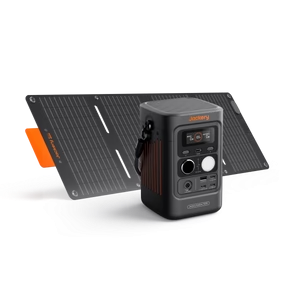
Smaller portable power stations can be useful when your priorities are electronics and relatively modest loads.
Potential uses can include compatible:
Phones.
Tablets.
Laptops.
Lighting.
Cameras.
Routers.
Other small devices.
Always check actual power requirements and the specifications of the particular power station before connecting equipment.
Larger Home Backup Options
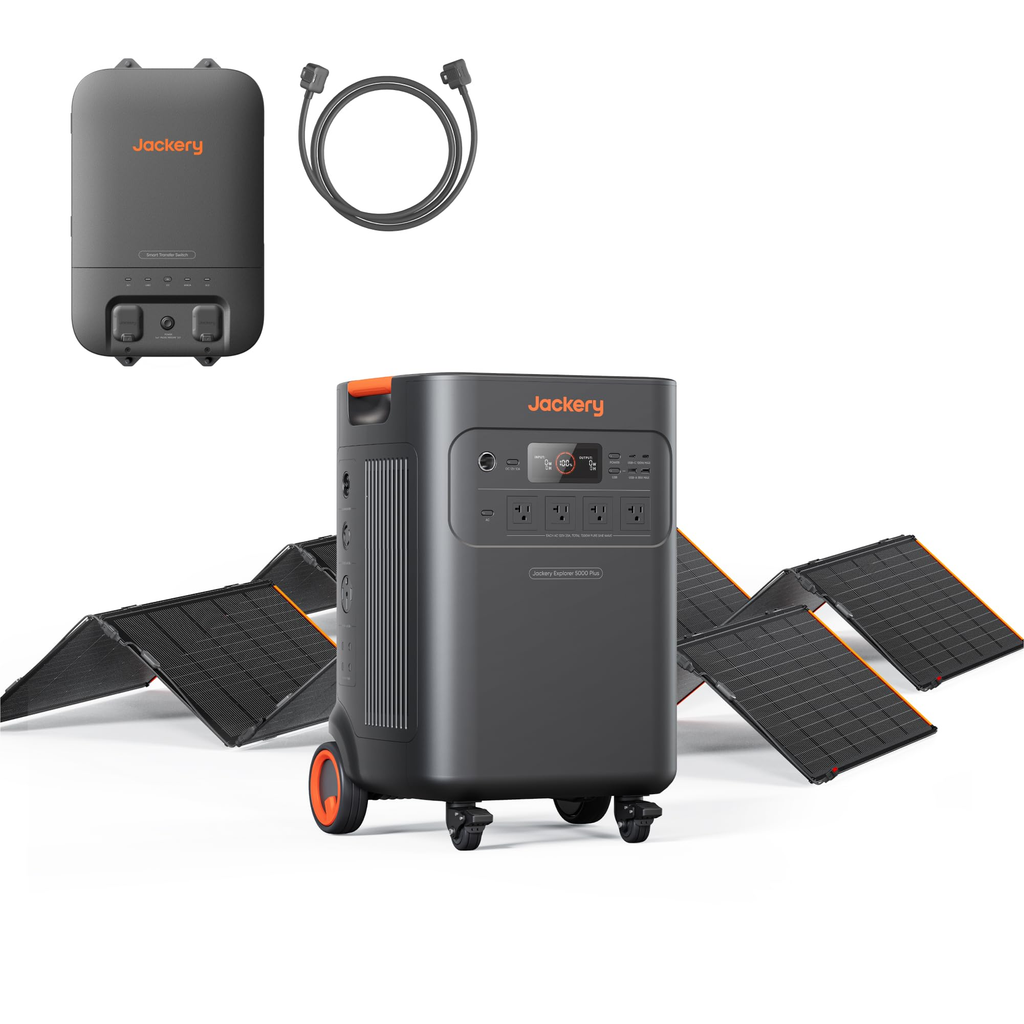
Jackery’s current UK range also extends into larger capacity expandable systems intended for more substantial power requirements.
These systems are designed around greater battery capacity and higher AC output than smaller portable models.
Some can also be expanded with additional compatible battery packs.
For home preparedness, this gives households the option to choose between relatively portable backup and larger capacity systems.
Jackery SolarSaga Panels
Jackery’s SolarSaga range provides portable solar charging options designed to work with compatible Jackery power stations.
Portable panels can be useful for:
Camping.
Caravan trips.
Outdoor work.
Off-grid travel.
Emergency preparedness.
Extended periods away from mains electricity.
Compatibility matters, so always check which panel and connection are recommended for your particular power station.
Portable Power Beyond Emergencies
One advantage of portable power equipment is that it doesn’t have to sit unused waiting for a blackout.
Depending on the model, it may also be useful for:
Camping.
Caravanning.
Road trips.
Outdoor photography.
Remote working.
Garden projects.
Outdoor events.
That can make the equipment more useful throughout the year.
How Much Backup Power Do You Need?
Use this simple process.
Step 1: List Your Essential Devices
Write down everything you’d realistically want to power.
Step 2: Find Their Power Consumption
Check their labels or specifications.
Step 3: Estimate Runtime
How many hours do you actually need each device?
Step 4: Calculate Approximate Energy Requirements
Multiply watts by hours.
Step 5: Add Some Margin
Real world battery performance isn’t perfectly equal to the theoretical calculation.
Step 6: Check Output Requirements
Make sure the system can handle the required load and any relevant startup demands.
This approach is much more useful than simply buying the largest battery you can afford.
Your Power-Cut Preparation Checklist
Before the next outage:
- Keep torches accessible.
- Check spare batteries.
- Charge phone power banks.
- Keep important cables together.
- Maintain some shelf stable food and water.
- Know where emergency contact information is stored.
- Identify your essential electrical devices.
- Check their power consumption.
- Charge your portable power station if you have one.
- Review equipment instructions.
- Consider vulnerable household members.
- Check official updates during an outage.
A little preparation can remove much of the uncertainty.

Final Thoughts
Power cuts are unpredictable.
Your preparation doesn’t have to be.
Start with the basics:
Lighting.
Communication.
Food and water.
Charged phones.
A plan for essential devices.
Then decide whether portable backup power makes sense for your household.
A small power bank may be enough for short interruptions.
A portable power station can support more devices.
Larger expandable systems and compatible solar panels can provide additional flexibility when longer backup periods are part of your planning.
Jackery UK’s range covers portable power stations, solar generators and solar panels across different capacities, making it possible to choose according to your actual energy requirements.
The important thing isn’t trying to keep every appliance running.
It’s knowing what matters most and having a plan to keep those essentials available when the mains power isn’t.