

Your Weight Doesn’t Tell the Whole Story
For decades, stepping onto a bathroom scale has been one of the most common ways to track fitness progress.
You see a number, compare it with yesterday or last week, and decide whether you’re moving in the right direction.
But body weight alone doesn’t explain what is actually changing.
Two people can weigh exactly the same while having very different levels of muscle, body fat and body water.
That’s where body composition tracking can provide additional context.
What Is Body Composition?
Body composition describes the different components that make up your total body weight.
Depending on the measurement method, this can include:
- Body fat
- Muscle mass
- Body water
- Visceral fat estimates
- Skeletal muscle
- Bone related metrics
Instead of answering only “How much do I weigh?”, body composition analysis attempts to provide more information about what contributes to that weight.
Why Weight Can Change From Day to Day
It’s normal for scale weight to fluctuate.
Changes can be influenced by factors such as:
- Hydration
- Food intake
- Exercise
- Sodium consumption
- Time of measurement
That’s why one isolated reading may not provide much useful information.
Looking at longer term trends can often be more informative than reacting to every daily change.
Muscle Gain Can Hide Progress on a Traditional Scale
Imagine you’ve started strength training.
Over several weeks, you may reduce some body fat while gaining muscle.
A traditional scale might show relatively little change because one change can partially offset the other.
Body composition tracking provides another way to observe those trends.
Instead of focusing entirely on weight, you can monitor whether estimated fat and muscle measurements are changing over time.
Body Fat Percentage Adds Context
Body fat percentage estimates the proportion of total body weight represented by fat.
Tracking this measurement alongside weight can provide additional context during changes in diet or exercise.
However, consumer body composition devices produce estimates rather than perfect measurements.
Hydration and measurement conditions can influence BIA readings, so consistency matters.
Muscle Mass Is Worth Tracking Too
If you’re strength training, your goal may not simply be to lose weight.
You might instead want to:
- Build muscle
- Maintain muscle
- Improve overall body composition
- Monitor differences between body areas
Tracking muscle estimates over time can provide additional information about how your routine is progressing.
Don’t Ignore Hydration
Water represents a significant portion of the human body and can influence both weight and BIA measurements.
This is one reason measurements are generally more useful when taken under similar conditions.
For example, you might choose to measure at approximately the same time of day and follow the device manufacturer’s recommendations.
Consistency makes it easier to compare trends rather than unrelated individual readings.
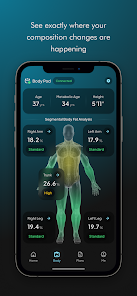
Segmental Analysis Goes Beyond a Standard Scale
Many traditional smart scales use electrodes under the feet.
More advanced systems can add hand electrodes and analyse different sections of the body.
The Hume Body Pod uses an eight sensor hand and foot system with multi frequency BIA.
Its segmental analysis covers the arms, legs and trunk, allowing users to view regional estimates rather than relying only on a single whole body figure.
What Can the Hume Body Pod Track?
The Hume Body Pod currently provides a broad collection of body composition measurements and derived insights.
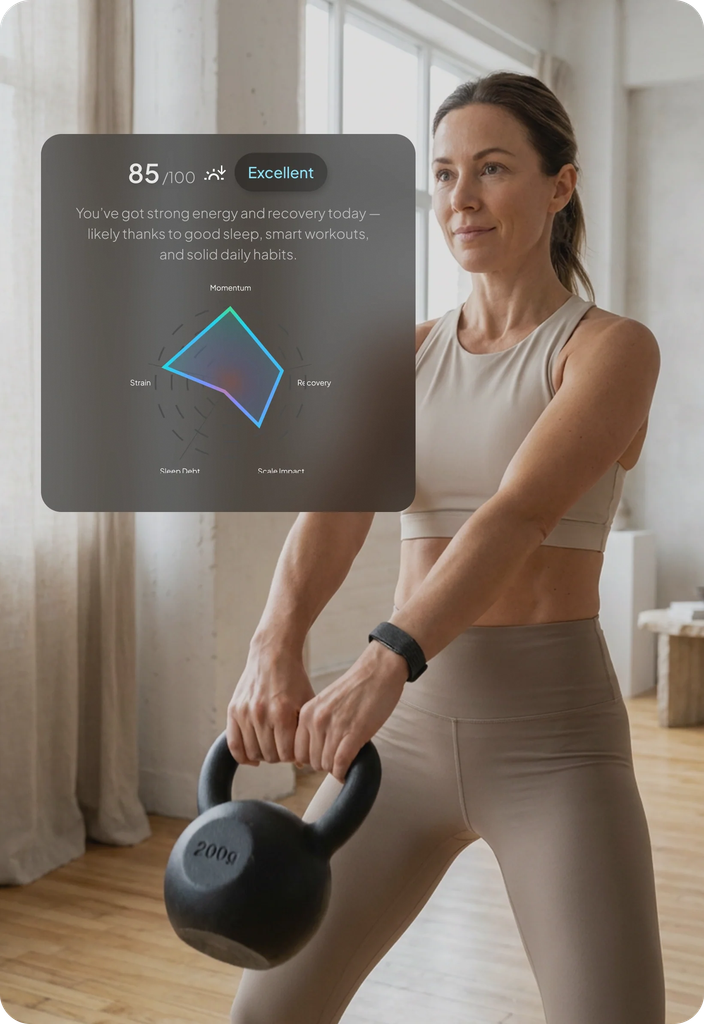
These include metrics related to:
- Weight
- BMI
- Body fat
- Fat mass
- Muscle mass
- Skeletal muscle
- Visceral fat
- Metabolic age
- Basal metabolic rate
- Total body water
- Intracellular water
- Extracellular water
- Segmental fat
- Segmental muscle
The Hume Health app brings these measurements together so users can monitor changes over time.
Look at Trends Instead of Individual Numbers
One of the most useful habits when using a smart scale is avoiding overreaction to individual measurements.
Instead, look at the direction of your results over several weeks.
Ask questions such as:
- Is my estimated body fat trending downward?
- Is muscle mass relatively stable?
- Are my measurements becoming more consistent?
- Am I progressing toward my personal goals?
Longer term patterns generally provide more context than a single morning reading.
Connect Body Composition With Your Lifestyle
Body composition doesn’t change in isolation.
Exercise, nutrition, sleep and everyday activity can all form part of the bigger picture.
Hume’s platform can connect with Apple Health and Google Health Connect to incorporate information such as workouts, steps and sleep alongside body composition data.
This can make it easier to view different aspects of your routine together.
Use Data as Feedback, Not a Daily Judgment
Health tracking should provide information rather than become a source of unnecessary stress.
If your weight increases slightly one morning, that doesn’t automatically mean your progress has disappeared.
Likewise, one unusually positive measurement doesn’t necessarily indicate a major change.
Use your data to identify broader patterns and make informed adjustments rather than judging your progress based on one reading.
Create Consistent Measurement Habits
For more meaningful comparisons, try to keep measurement conditions reasonably consistent.
Consider:
- Measuring at a similar time.
- Following the device instructions.
- Using the same measurement method.
- Avoiding comparisons between completely different devices.
- Focusing on longer term trends.
This can help reduce some of the noise associated with everyday fluctuations.
Hume Health’s Approach to At-Home Tracking
Hume Health focuses on giving users more information than a traditional bathroom scale.
The Body Pod combines multi frequency BIA with electrodes in both the platform and handheld sensor system.
The company says the device tracks 45 body metrics and uses segmental measurements to analyse different areas of the body.
The accompanying app then turns this information into progress tracking and broader health insights.
Smart Scales Aren’t Medical Diagnoses
It’s important to understand the limitations of home health technology.
Body composition scales can provide useful estimates and help users monitor trends, but their readings shouldn’t be treated as medical diagnoses.
If you have concerns about your health, body composition, unexplained weight changes or other symptoms, consult an appropriate healthcare professional.
Set Goals Beyond Weight
Instead of making one number your only target, consider broader goals.
You might focus on:
- Becoming stronger
- Improving exercise consistency
- Maintaining muscle
- Changing body composition
- Improving daily activity
- Developing better sleep habits
- Feeling more capable during workouts
Progress can take many forms that aren’t immediately visible on a traditional scale.
Final Thoughts
Your body is much more complex than a single number.
Weight can be useful information, but it doesn’t distinguish between muscle, fat, water and other components that contribute to your overall body mass.
Body composition tracking can add valuable context by allowing you to monitor estimated fat, muscle, hydration and other measurements over time.
With multi frequency BIA, hand and foot sensors, segmental analysis and app-based tracking, the Hume Body Pod offers a more detailed approach for people who want to look beyond body weight and better understand their longer term fitness trends.