
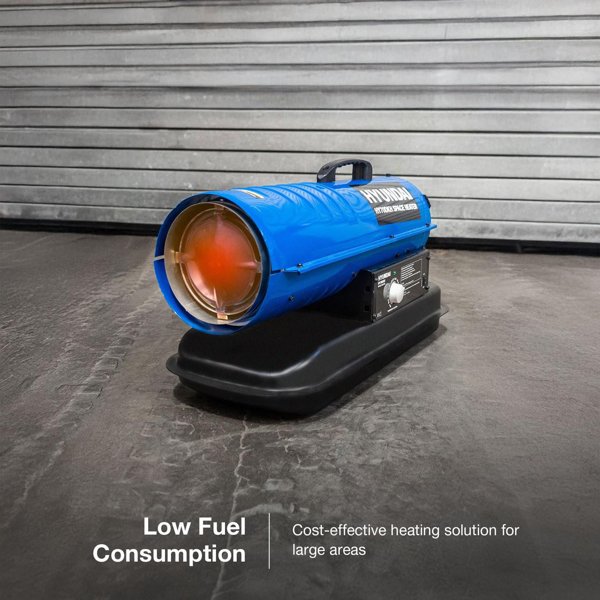
Working in an unheated workshop, barn or large garage through a British winter is hard on hands, tools and paint finishes. Domestic electric heaters struggle in big, draughty spaces, which is why many trades, farms and serious hobbyists use forced-air heaters that burn diesel or kerosene.
Hyundai Power Equipment sells three of these heaters in the UK, from a compact carry model to a large wheeled unit. This guide compares them and explains the safety rules that come with direct-fired heat. Prices and specifications are from the Hyundai Power Equipment UK website as checked on 4 November 2026.
Contents
Three Hyundai Space Heaters Compared
| Model | Price (4 Nov 2026) | Output | Approx. coverage | Fuel use | Format |
|---|---|---|---|---|---|
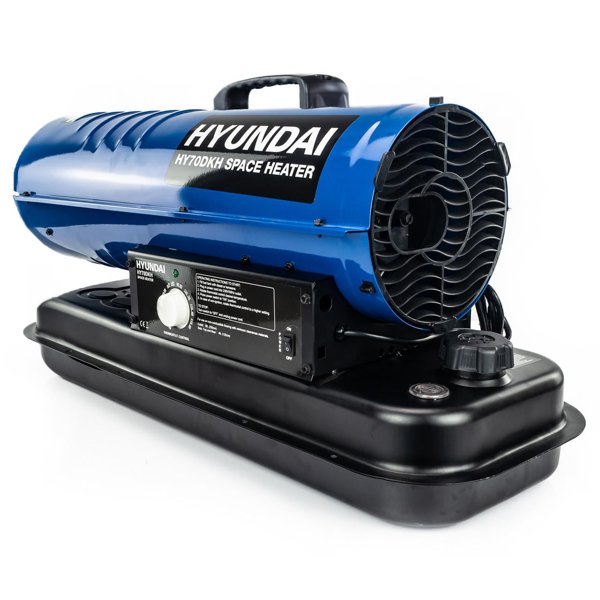
| HY70DKH | £230.99 | 20kW / 70,000 BTU | 496 cubic metres | 1.9L/hour, 19L tank | Carry handle, 12.9kg |
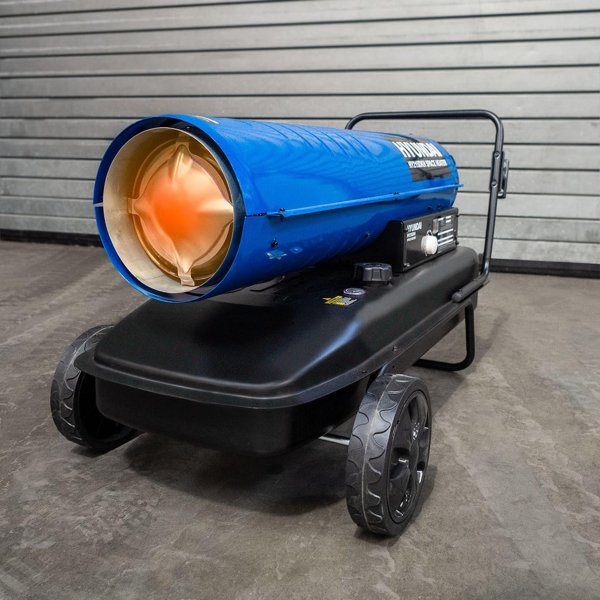
| HY125DKH | £272.99 | 37kW / 125,000 BTU | 900 cubic metres | 3.6L/hour, 38L tank | Two wheels and stand |
| HY215DKH | £335.99 | 63kW / 215,000 BTU | 1,500 cubic metres | 5.8L/hour | Two wheels and stand |
All three run on diesel or kerosene, have an adjustable thermostat and also need a 230V electrical supply to run the fan and controls. Hyundai’s pages describe a 3-year warranty (terms apply) on the larger wheeled models. All three were listed as available when we checked.
How Direct-Fired Heaters Work
These are direct-fired heaters: they burn fuel in a combustion chamber and a powered fan blows the hot air, together with the combustion gases, into the working area. That is why they warm a big space so quickly, and also why ventilation is essential. Hyundai’s own product page for the HY70DKH is clear that it is not for homes, living or sleeping spaces, or confined spaces without adequate ventilation, and that flues or ductwork must not be fitted.
Hyundai HY70DKH: Compact 20kW Heater
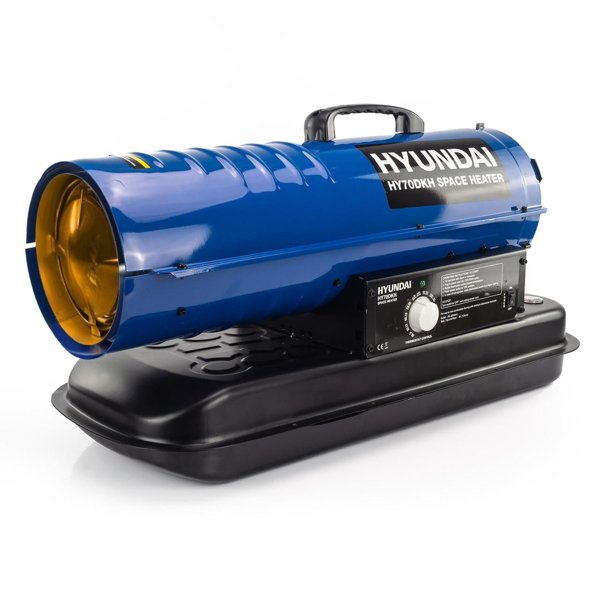
The smallest model gives 20kW (70,000 BTU) and Hyundai quotes approximate coverage of 496 cubic metres. It has a 19L tank and a rated fuel use of 1.9L per hour. Hyundai notes that dividing one by the other gives a nominal 10 hours, but stresses that this is a calculation rather than a guaranteed runtime, since real use depends on the thermostat. It weighs 12.9kg and has a top carry handle but no wheels, which suits a single workshop or a large double garage with good ventilation.
Hyundai HY125DKH: 37kW on Wheels
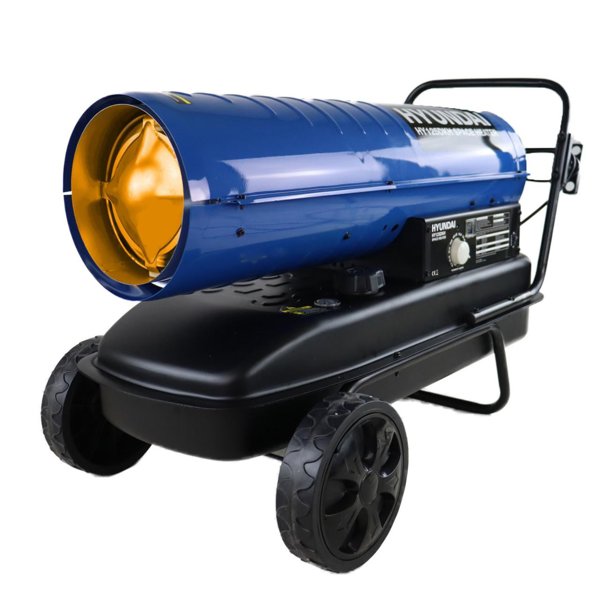
The mid-sized model steps up to 37kW (125,000 BTU) with approximate coverage of 900 cubic metres. Hyundai lists average fuel use of 3.6L per hour and a tank good for roughly 10.5 hours. It sits on two wheels with a stand, comes with a 13A UK plug fitted, and its thermostat shuts the burner down when the set temperature is reached and restarts it as the space cools. Hyundai suggests it for medium-sized garages, factories and workshops.
Hyundai HY215DKH: 63kW for Large Spaces
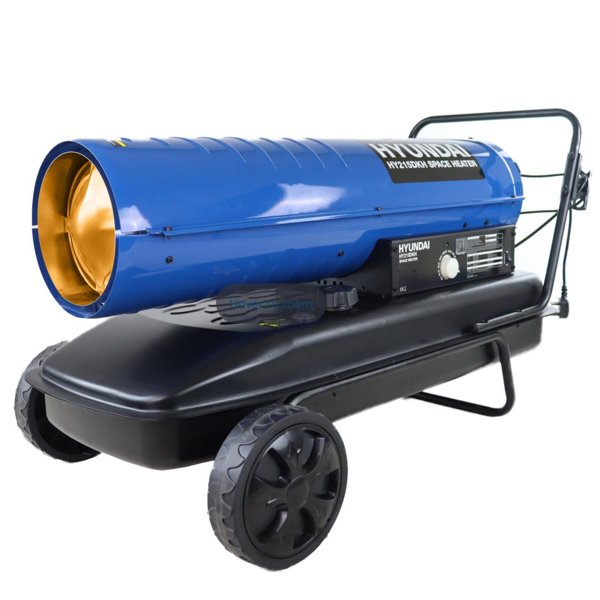
The largest heater delivers 63kW (215,000 BTU) and approximate coverage of 1,500 cubic metres, with average fuel use of 5.8L per hour and a tank for roughly 8.5 hours. Hyundai positions it for larger garages, warehouses, agricultural buildings and automotive workshops. Like the HY125DKH, it is wheeled and needs only minimal assembly.
How to Size a Heater for Your Space
Start by measuring your space: length times width times height gives the volume in cubic metres. A 6m by 8m workshop with a 3m ceiling is 144 cubic metres, well within the smallest model’s guide figure, while a 15m by 10m barn with a 5m roof is 750 cubic metres, which points to the HY125DKH. Hyundai notes that coverage figures are a guide and vary with ventilation and insulation, so a draughty, uninsulated building may need more output than the numbers suggest.
Safety Checklist
- Only use in well-ventilated working areas, never in homes or sleeping spaces.
- Keep continuous fresh-air ventilation and the air inlet and outlet clear.
- Hyundai suggests around 8ft clear in front of the outlet and 4ft around the sides and top for the wheeled models.
- Use only diesel or kerosene as specified in the manual, never petrol.
- Place the heater on a suitable, stable surface away from flammable materials.
- Switch off, unplug and let the heater cool before moving or refuelling it.
- Fit a carbon monoxide alarm in the working area.
Diesel or Kerosene?
Hyundai says all three heaters can run on either diesel or suitable kerosene as specified in the manual. Many users choose whichever fuel they already store on site: farms often have red diesel for machinery (check the rules on its permitted uses), while kerosene is common where buildings have oil-fired heating. Store fuel in approved containers away from the heater, and never mix in petrol or other unapproved fuels. If you are unsure which grade suits your model, check the manual or ask Hyundai before filling the tank.
Running Costs
Fuel use is the main running cost. At the rated figures, the HY70DKH burns 1.9 litres an hour and the HY215DKH 5.8 litres, so an eight-hour day could use roughly 15 to 46 litres depending on the model, before the thermostat cuts in. Because the thermostat cycles the burner, real consumption is usually lower once the space is warm. Check current local diesel or kerosene prices to estimate your own costs, and choose the smallest heater that can handle your space.
Final Thoughts
For a ventilated workshop or garage, the HY70DKH is the practical starting point; the HY125DKH and HY215DKH suit barns, warehouses and larger units. Whatever you choose, read the manual and follow the ventilation rules. You can see full specifications on the Hyundai Power Equipment website.
For generators, garden machinery and more, browse the Hyundai Power Equipment range.
Disclaimer: This article contains affiliate links. If you buy through them we may earn a commission at no extra cost to you. Prices and specifications were checked on 4 November 2026 and may change. Always follow the manufacturer’s manual.