
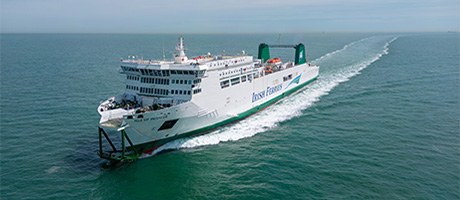
A ferry to France with your own vehicle has a catch that does not apply to foot passengers: the price and even your right to board depend on how tall and long the vehicle is. Irish Ferries asks you to declare exact dimensions when you book, and says that vehicles declared incorrectly may be charged at the port or refused boarding. This guide walks through the categories on the Irish Ferries France page, plus the pet rules and the ship used on its Dublin to Cherbourg route, using the brand’s published information as of 26 October 2026.
Check Irish Ferries Sailings to France
In this guide
Why Vehicle Height Matters
On the booking form, Irish Ferries asks for the vehicle height including roof load, such as bike racks and roof boxes. It says that any car, MPV or 4×4 must be declared by height, and that declaring the wrong size can lead to extra charges at check-in or a refusal to board because of insufficient space. The brand also gives a money-saving tip: put bicycles on a rear rack instead of the roof to reduce your overall height and your price.
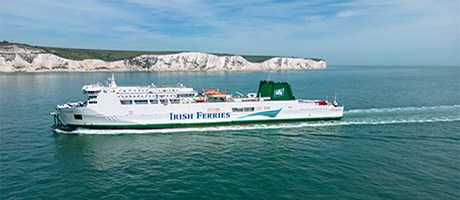
Vehicle Categories at a Glance
| Vehicle | Categories published by Irish Ferries |
|---|---|
| Car, MPV or 4×4 | Up to 1.90m high; up to 2.25m high; over 2.25m high |
| Campervan or motorhome | Up to 2.25m high; over 2.25m high; over 8.00m long (including rear racks) |
| Minibus (multi-seat) | Up to 2.25m high; over 2.25m high; over 8.00m long |
| Van (non-commercial) | Up to 2.25m high and 6m long; up to 2.6m high and 6m long (Motorist Van fares) |
| Van over 2.6m high or 6m long | Freight Van fares apply |
Heights always include roof items. If your car sits just under a limit, a roof box could push you into the next category, so measure it as loaded.
Start a Booking with Your Vehicle
Vans, Campervans and Commercial Use
Irish Ferries says it accepts bookings for vans used for non-commercial purposes up to 6m long and 2.6m high. Any vehicle, whatever its size, carrying goods or equipment for commercial purposes should be booked through its Freight Commercial Team instead. The booking form asks you to confirm that you are not carrying commercial or chargeable goods subject to customs declarations. If the information is wrong, the brand says it may re-price the booking and collect the difference, including VAT, at check-in.
Campervans and motorhomes have their own categories, and the cut-off for length is 8.00m including any rear rack. A bike carrier on the back therefore counts towards the figure.
Travelling with Pets
The booking form says pets must be pre-booked before check-in, and that for more than five pets you should contact Irish Ferries first. The brand also advertises a Take your pet to France page on its home page. On the Isle of Inisheer, which it describes as offering a basic service on its Dublin to Cherbourg routes, it lists a number of four-berth ensuite pet cabins with TVs and access to an outside area.
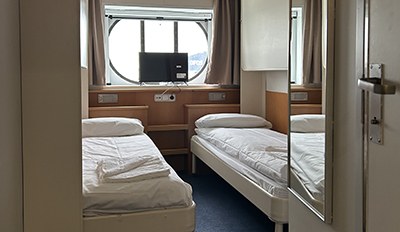
Pets have to be booked per sailing, so add them when you make the reservation rather than waiting until the day. Check the current entry requirements for France on official government pages before you travel, as these are outside Irish Ferries’ control.
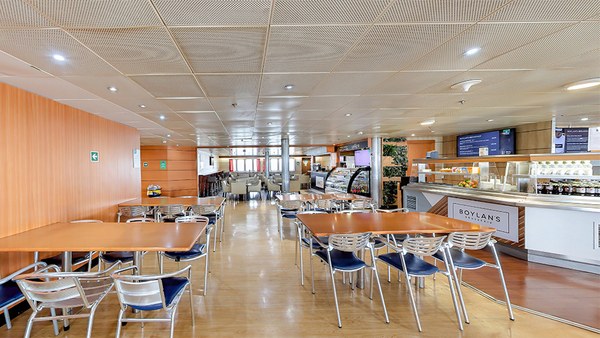
Cabins and Facilities on the Isle of Inisheer
Irish Ferries lists cabins from two to four berth with ensuite facilities and TVs on the Isle of Inisheer. A reserved reclining seating area is also listed, without dedicated showers. The ship has a restaurant, a cafe, a shop and an extra seating area on deck 7, plus wifi and a Click and Collect shopping service. The brand calls it a basic service with limited facilities, which is useful context if you are comparing it with a larger ship.
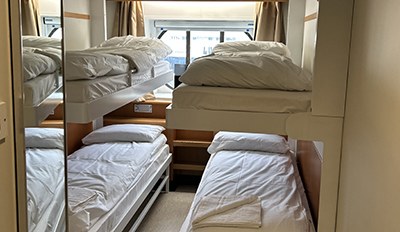
If you value a particular on-board facility, check which ship is scheduled on your sailing when you choose the date, as the brand also operates larger vessels on other routes.
Routes, Passengers and Extras
The booking form on the France page offers Ireland to France, Britain to Ireland and Dover to Calais, with fares in GBP or EUR. Children are 4 to 15 and infants 0 to 3, and wheelchair numbers are limited per sailing for safety reasons under EU rules, so state them at booking. The home page shows a Dover to Calais day-return fare from GBP 55 for a car and up to five passengers, as a headline offer. It also lets you pay with Tesco Clubcard tokens, one token per booking, and advertises a Flexi Fare for changes of plan.
How to Declare Your Vehicle Correctly
The simplest way to avoid trouble is to treat the form as a measuring exercise. Start with the manufacturer height in the handbook, then add anything fixed to the roof: a box, a rack, bikes, a surfboard or a carrier. Round up rather than down when you are close to a limit, since the brand says wrongly declared vehicles can be charged at the port. For campervans, measure the overall length with any rear rack or cycle carrier fitted, because that is how the 8.00m threshold is defined. If your vehicle is borderline, call Irish Ferries before booking instead of relying on a guess.
Who Each Option Suits
- Standard car, no roof load: the lowest height band is the natural fit.
- Family car with a roof box: check whether the box pushes you above 1.90m or 2.25m.
- Camper owners: watch both height and the 8.00m length limit.
- Van users on holiday: motorist van fares are for non-commercial use only.
- Pet owners: book the pet at the same time as the sailing, and look at the pet cabin option.
A Quick Booking Checklist
- Measure your vehicle height with roof boxes and racks fitted.
- Measure length for campervans, including any rear rack.
- Confirm the van is for non-commercial use if you are booking a motorist fare.
- Add your pets at booking and note the cabin options.
- Declare wheelchair users and the correct passenger ages.
- Check the live sailing times and fares before you pay.
Ready to compare dates? Use the Irish Ferries booking tool to see live fares for your exact vehicle, or read the brand’s travel information pages before you decide.
Information was taken from the Irish Ferries website on 26 October 2026 and may change. Some links in this article are affiliate links.
